Marketing Best Practices
Commercial Real Estate Lead Generation: The Complete Guide 2026
Last updated
Table Of Contents
- How to Generate Commercial Real Estate Leads
- How CRE Brokers Find Leads Today
- The Best Commercial Real Estate Lead-Generation Strategies
- 1. Start With Your Existing CRE Database
- 2. Use Commercial Real Estate Listing Platforms
- 3. Monitor Transaction and Market Activity
- 4. Use CRE Prospecting and Property Intelligence Tools
- 5. Build Prospecting Lists From CRE Data Sources
- 6. Prospect on LinkedIn
- 7. Turn Your Website Into a Lead-Generation Channel
- 8. Create Dedicated Property Websites and Landing Pages
- 9. Create Content That Attracts CRE Prospects Through Search
- 10. Optimize Your Lead-Capture Forms
- 11. Use Offering Memorandums and Documents to Capture Intent
- 12. Use Email Marketing to Generate and Nurture Leads
- 13. Use Google Ads to Capture High-Intent Search Demand
- 14. Use LinkedIn Advertising for Precise B2B Targeting
- 15. Use Social Media and Retargeting to Stay Visible
- 16. Attend Commercial Real Estate Conferences and Events
- 17. Reconnect With Former Clients and Colleagues
- 18. Host Your Own Events
- 19. Ask Existing Clients for Referrals
- 20. Join Commercial Real Estate Associations
- How to Build a Repeatable CRE Lead-Generation System
Share post


Commercial real estate lead generation has changed.
Today, tenants, investors, and buyers don’t start with brokers… they start online. They research properties, compare options, and shortlist opportunities long before they ever speak to someone.
That means the firms winning deals today aren’t just better networkers. They’re better at capturing demand early, converting website visitors into leads, and building a pipeline that doesn’t depend on any one person’s Rolodex.
This guide covers how to generate commercial real estate leads in 2026: from outbound prospecting to inbound marketing to the technology that ties it together. Plus, how top-performing CRE teams turn each tactic into a repeatable system rather than a one-off campaign.
In this guide, you’ll learn 20 proven ways to generate commercial real estate leads, plus the systems top-performing CRE teams use to scale them.
How to Generate Commercial Real Estate Leads
Commercial real estate lead generation is the process of identifying and capturing tenants, buyers, investors, and owners who are already, or will soon be, in the market for space or a transaction, then moving them into a pipeline you can track and follow up on.
There is no single tactic that does this reliably on its own. Every CRE team generating leads consistently in 2026 is combining three channels:
- Data-driven prospecting (outbound): using CRE databases, listing platforms, and prospecting software to identify and reach out to likely buyers, tenants, and sellers directly.
- Digital inbound marketing (high-intent leads): property websites, SEO and content, email marketing, and paid ads that let prospects find and qualify themselves before you ever call.
- Relationship-driven generation (offline): referrals, conferences, associations, and personal networks — still the highest-trust source of leads, just the slowest to scale.
The rest of this guide breaks down how to run each channel well, and how the right technology stack keeps leads from falling through the cracks between them.
How CRE Brokers Find Leads Today
Cold calling still works, and for many brokers, especially early in their careers, it remains the fastest way to build a pipeline. It gives direct access to decision-makers, immediate feedback, and a track record that’s hard to argue with.
But what’s changed is what happens before that call.
Buyers and tenants now research online first, compare multiple properties, and expect instant access to information. By the time a broker reaches them, they may already know the market, know the competing listings, and have a shortlist in hand.
That shift is why top-performing CRE teams no longer treat outreach as the starting line. They position themselves earlier in the decision process: capturing attention, building trust, and generating leads through search and content before direct outreach ever happens. Cold calling and digital inbound aren’t competing strategies; the best pipelines use outbound to create leads and inbound to warm them up, and vice versa.
The Best Commercial Real Estate Lead-Generation Strategies
Every durable CRE lead-generation strategy comes down to the same three channels, combined into one system rather than run in isolation.
| Channel | What it includes | Best for |
|---|---|---|
| Data-driven prospecting | CRE databases, listing platforms, prospecting software, cold outreach | Fast pipeline-building, targeted deals, early-career brokers |
| Digital inbound | Property websites, SEO/content, email marketing, paid ads, lead capture | Scalable, compounding lead flow; your biggest long-term opportunity |
| Relationship-driven (offline) | Referrals, conferences, associations, personal network | High-trust, high-close-rate leads that don’t scale on their own |
👉 The firms winning today don’t rely on one channel. They run all three, and use technology to make sure a lead generated in one channel, say a conference contact, doesn’t die in a spreadsheet instead of showing up in the same pipeline as a website form fill.
The sections below go channel by channel, starting with the marketplaces most CRE deals still touch in some way.
✅ Data-Driven Prospecting (Outbound)
1. Start With Your Existing CRE Database
One of the easiest places to find commercial real estate leads is the database you already have.
Most brokerage firms have years of contacts spread across:
- CRMs
- Email lists
- Excel spreadsheets
- Previous transactions and former clients
- Property inquiries
Before buying another database, organize the contacts you already own.
Useful ways to segment them include:
- Tenant, investor, owner, or broker
- Geography
- Property type
- Previous property interest
- Active vs. dormant
A contact who wasn’t ready to act two years ago may have a completely different requirement today.
Periodically re-engaging older contacts through targeted emails, market updates, phone calls, or LinkedIn outreach can surface opportunities that would otherwise remain buried in your database.
Even contacts that have been inactive for years may now have new needs or investment goals. Reach out via email, phone, or LinkedIn to re-engage dormant leads.
2. Use Commercial Real Estate Listing Platforms
Top commercial real estate listing platforms for prospecting in 2026 include:
- LoopNet
- Crexi
- CommercialSearch
- Brevitas
- Local or property-type-specific marketplaces
These platforms serve a different purpose from traditional prospecting databases.
Instead of simply helping you identify people to contact, listing marketplaces can expose your properties to people who are already researching commercial properties.
That makes them particularly valuable for capturing tenant, buyer, and investor demand.
Whenever possible, syndicate listing information broadly while also driving prospects back toward your own property marketing ecosystem where you can better capture and understand their activity.
3. Monitor Transaction and Market Activity
Commercial real estate activity creates prospecting signals.
Watch for:
- Recent acquisitions
- Lease expirations
- New developments
- Refinancing activity
- Company expansions or relocations
- New funding
- Leadership changes
CRE publications such as Bisnow, Commercial Observer, and The Real Deal can be useful starting points, along with local business journals and regional real estate publications.
The goal is to identify a reason to contact someone.
Outreach is much more relevant when it’s connected to something happening with the prospect’s company, property, or market.
4. Use CRE Prospecting and Property Intelligence Tools
Commercial real estate data platforms can help brokers build more targeted prospect lists.
Depending on the platform, you may be able to filter properties and owners using criteria such as:
- Property type
- Location
- Ownership
- Transaction history
- Mortgage information
- Estimated value
- Loan maturity
- Tenant information
- Portfolio size
Platforms such as Reonomy, PropertyShark, ProspectNow, and other CRE intelligence tools can help turn a broad territory into a more manageable list of potential opportunities.
The key is avoiding the temptation to treat every record as a lead.
A database gives you prospects. Your research, outreach, and subsequent engagement determine which of those prospects become actual leads.
5. Build Prospecting Lists From CRE Data Sources
The more precisely you define your ideal prospect, the more useful your data becomes.
Instead of targeting:
Every office owner in Chicago
you might target:
Owners of 50,000–250,000-square-foot suburban office buildings that haven’t traded in the past seven years.
Or instead of:
Every company in Boston
you might identify:
Technology companies with 50–250 employees that have recently raised capital or announced hiring plans.
Good CRE prospecting starts by answering three questions:
- Who are we trying to reach?
- What signals suggest they may have a real estate need?
- Why would they want to speak with us now?
Once those are clear, data becomes much more useful.
6. Prospect on LinkedIn
LinkedIn is particularly useful in commercial real estate because many CRE transactions ultimately involve reaching a relatively small number of business decision-makers.
LinkedIn and Sales Navigator allow brokers to search by criteria such as:
- Company
- Industry
- Location
- Job title
- Seniority
- Company size
This is highly effective for reaching C-suite executives, brokers, and investors at scale.
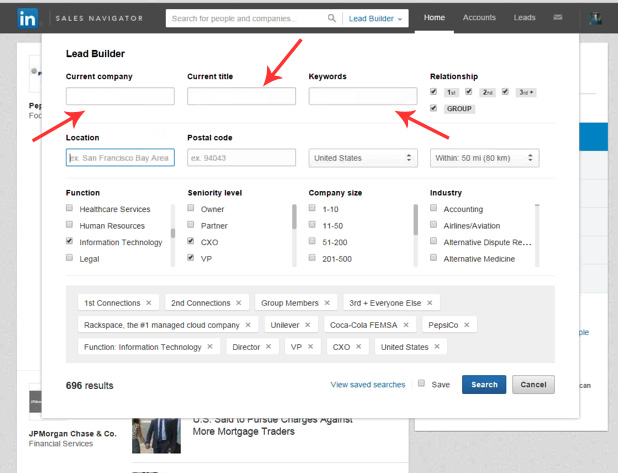
For tenant-representation prospecting, for example, you might identify CEOs, COOs, CFOs, workplace executives, or real estate directors within your target market.
For investment sales, LinkedIn can help identify principals, acquisitions professionals, asset managers, and other decision-makers.
The best approach is usually not to immediately pitch.
Use LinkedIn to research the prospect, understand their business, establish a connection, and create a relevant reason for a conversation.
✅ Digital CRE Lead Generation (High-Intent Leads)
7. Turn Your Website Into a Lead-Generation Channel
Your website shouldn’t function only as an online brochure.
It should help prospects:
- Find your properties
- Understand your expertise
- Research markets
- Meet your brokers
- Request property information
For many prospects, your company website will be one of the first interactions they have with your firm.
Make sure important pages have a clear next step.
That might be:
- View available properties
- Contact a broker
- Download an offering memorandum
- Schedule a tour
The easier it is for a visitor to move from research to action, the more valuable your website becomes as a lead-generation asset.
8. Create Dedicated Property Websites and Landing Pages
Corporate websites aren’t the only websites that generate CRE leads.
A dedicated commercial real estate property website can act as the central destination for an individual listing.

A strong property website gives prospects immediate access to information such as:
- Property overview
- Photos and video
- Availability
- Floor plans
- Location maps
- Amenities
- Offering materials
- Broker contact information
Most importantly, it creates opportunities for a visitor to identify themselves through inquiries, document requests, tour requests, or other calls to action.
SharpLaunch property websites, for example, allow CRE teams to publish property information, capture inquiries, and track visitor and referral activity from their marketing campaigns.
Instead of sending prospects to disconnected PDFs and listing pages, a property website creates a single destination for the complete marketing campaign.
9. Create Content That Attracts CRE Prospects Through Search
Not every prospect begins by searching for a specific property.
They may search Google for questions such as:
- Best warehouse locations in Dallas
- Office market outlook Boston
- How much office space does my company need?
- Cap rates for multifamily properties
- Best neighborhoods for life sciences companies
Creating useful content around the questions your clients actually ask can introduce your brokerage to prospects much earlier in their decision process.
Useful CRE content formats include:
- Market reports
- Neighborhood guides
- Property-type guides
- Investment research
- Transaction analysis
- Leasing guides
- Checklists
- Case studies
- Frequently asked questions
Search engine optimization can make this content discoverable for months or even years after publication.
The objective shouldn’t be simply to attract traffic.
Focus on topics closely connected to the types of clients and transactions your firm wants to generate.
10. Optimize Your Lead-Capture Forms
Once someone arrives on your website, make it easy for them to take the next step.
Lead forms can be used for:
- General inquiries
- Property inquiries
- Tour requests
- Offering memorandum access
- Newsletter registration
- Market report downloads
- Contact requests
Avoid asking for information you don’t actually need.
In many situations, name, email, company, and perhaps one qualifying field are enough to begin the conversation.
Long forms create additional friction, particularly for prospects who are still early in their research.
Match the amount of information you request with the value of what you’re providing.
11. Use Offering Memorandums and Documents to Capture Intent
Commercial real estate transactions are document-heavy.
Offering memorandums, brochures, floor plans, financial documents, and other property materials can therefore become valuable lead-generation tools.
Rather than publishing every document as an anonymous PDF download, CRE teams can selectively require registration before providing access to higher-value materials.
This can help identify prospects who are moving beyond casual browsing.
Even more useful is understanding what happens after the registration.
For example:
- Which documents did they download?
- Which property are they researching?
That behavioral information can help brokers prioritize follow-up.
12. Use Email Marketing to Generate and Nurture Leads
Your email database is one of the few marketing audiences your firm actually owns.
Use it.
CRE email marketing campaigns can promote:
- New listings
- Price changes
- New availability
- Recent transactions
- Market reports
- Property updates
- Events
- Research
- Broker insights
But email becomes significantly more useful when you look beyond the initial send.
Campaign engagement can provide another signal of interest.
If a prospect repeatedly opens an email, clicks into a property website, and downloads an offering memorandum, that person deserves different follow-up from somebody who has never engaged.
SharpLaunch’s email marketing tools connect property marketing campaigns with lead activity, allowing CRE teams to see campaign opens and clicks alongside the rest of their property marketing efforts.
13. Use Google Ads to Capture High-Intent Search Demand
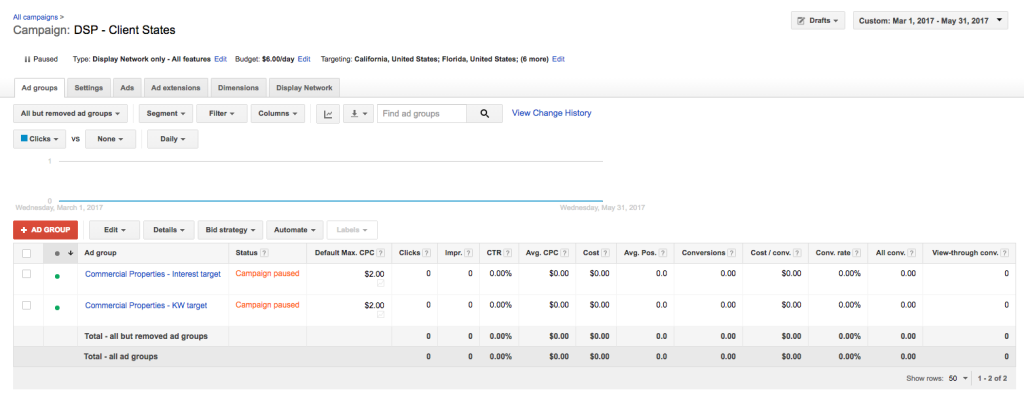
Search advertising can put your property in front of prospects at the exact moment they’re searching for something relevant.
For example:
- warehouse for lease Phoenix
- office space downtown Austin
- industrial property for sale New Jersey
- retail space for lease Miami
These searches can have strong commercial intent.
Create dedicated landing pages that closely match the searcher’s query rather than directing every campaign to your homepage.
Because competitive real estate keywords can become expensive, closely monitor:
- Cost per click
- Conversion rate
- Cost per lead
- Property inquiries or tours generated
- Lead quality
Traffic alone shouldn’t determine whether a campaign is successful.
14. Use LinkedIn Advertising for Precise B2B Targeting
LinkedIn advertising can be particularly useful when the audience for a CRE campaign is narrow.
For example, a life sciences leasing campaign might target executives at biotechnology and pharmaceutical companies within a specific geography.
LinkedIn targeting options can include:
- Company
- Industry
- Job function
- Seniority
- Location
- Company size
That precision comes at a price, so LinkedIn generally works best for campaigns where reaching a relatively small number of highly relevant decision-makers is valuable.
15. Use Social Media and Retargeting to Stay Visible
Social media isn’t usually the strongest source of direct CRE leads on its own.
But it can play an important supporting role.
Platforms such as LinkedIn, Instagram, Facebook, and YouTube can help distribute:
- New listings
- Property videos
- Market commentary
- Recent deals
- Research
- Broker insights
- Company news
Retargeting can also keep properties visible to people who previously visited your website but didn’t inquire.
Think of social media primarily as part of the broader marketing system rather than an isolated lead-generation channel.
✅ Relationship-Driven CRE Lead Generation (offline)
16. Attend Commercial Real Estate Conferences and Events
Industry conferences bring together brokers, owners, developers, investors, lenders, and vendors in one location, creating opportunities to build relationships that would otherwise take months to develop.
Participating at conferences and commercial real estate events exposes you to a large audience of potential prospects, opening up new networking and partnership opportunities, along with direct lead generation opportunities.

The most successful event strategy begins before the event itself.
Review:
- Speakers
- Sponsors
- Exhibitors
- Attendees
- Participating companies
Then identify the people you most want to meet and arrange conversations in advance.
Events become much more effective when you arrive with a target list rather than hoping to meet the right person by chance.
17. Reconnect With Former Clients and Colleagues
The people you work with now and have worked with in the past are a prime resource for accessing a wider audience of potential leads. They can help share information about your newest listings and may be personally interested in pursuing a conversation either for their current company or on behalf of a client.
Consider engaging previous:
- Clients
- Coworkers
- Brokers
- Tenants
- Investors
These contacts may all become future sources of business.
Don’t wait until you need something to contact them.
Periodic, genuine communication keeps those relationships alive and often surfaces opportunities that aren’t publicly available.
18. Host Your Own Events
Instead of attending somebody else’s audience, build your own.
One of the best ways to generate commercial real estate leads is to create your own audience instead of always relying on someone else’s.
Hosting a market outlook breakfast, property tour, webinar, investor discussion, or small networking event gives prospects a reason to engage with your firm even when they are not actively buying, selling, or leasing.
The real value is what happens afterward. Events give brokers a natural follow-up opportunity, help establish expertise, and create relationships earlier in the decision-making process. When a transaction eventually comes up, your firm is already familiar rather than showing up for the first time.
19. Ask Existing Clients for Referrals
Some of the strongest leads come from people who already know your work.
After a successful transaction, don’t be afraid to ask clients whether there is anyone else in their network who could benefit from your services.
You can also make referrals easier by remaining visible between transactions through:
- Market updates
- Useful research
- Personal check-ins
People are much more likely to refer a broker who remains top of mind.
20. Join Commercial Real Estate Associations to Expand Your Network
Joining a local commercial real estate association is a great way to expand your network and build valuable relationships.
There are a number of national associations such as BOMA, CCIM, CoreNet Global, and others that also provide education and networking opportunities to widen your reach.
Membership alone won’t generate leads. The value comes from participation, building relationships, contributing expertise, and staying visible within your market.
How to Build a Repeatable CRE Lead-Generation System
You don’t need to implement all 20 strategies at once.
A practical lead-generation system might look like this:
Step 1: Define Your Target Market
Choose the property types, geographies, companies, and decision-makers you want to reach.
Step 2: Build Your Prospect Database
Combine existing contacts, CRE databases, LinkedIn, market research, and property intelligence.
Step 3: Create Reasons to Engage
Market relevant properties, publish useful insights, distribute research, and share market intelligence.
Step 4: Create Conversion Points
Use property websites, landing pages, forms, document portals, and clear calls to action.
Step 5: Track Engagement
Monitor inquiries, website activity, email engagement, downloads, and other buying signals.
Step 6: Prioritize Follow-Up
Spend more time on prospects demonstrating real interest.
Step 7: Nurture Everyone Else
Stay visible through useful emails, market updates, properties, content, events, and periodic outreach.
Over time, this creates something much more powerful than a list of leads.
It creates a repeatable system for producing opportunities.

Get in Touch!
Streamline your CRE marketing operations and amplify your digital presence with an all-in-one solution built for busy commercial real estate teams.
Get in TouchFrequently Asked Questions (FAQ)
What is the best way to generate commercial real estate leads?
There is no single best source of CRE leads. The strongest approach combines outbound prospecting, digital inbound marketing, and leveraging relationships. Brokers can proactively identify prospects through CRE databases and LinkedIn while simultaneously generating inbound opportunities through property websites, listing platforms, SEO, email marketing, and referrals.
How do you generate commercial real estate leads online?
Common online CRE lead-generation channels include property websites, commercial real estate listing platforms, Google search, content marketing, email campaigns, LinkedIn, paid search, social advertising, downloadable property materials, and lead-capture forms.
Do commercial real estate websites generate leads?
Yes, but the website needs to provide clear conversion opportunities. Property inquiries, contact forms, tour requests, document registrations, and offering memorandum downloads can turn anonymous website traffic into identifiable prospects.
What is the difference between CRE prospecting and lead generation?
Prospecting generally refers to proactively identifying and contacting potential clients. Lead generation is broader. It includes prospecting but also encompasses marketing activities that attract people to your firm or properties and encourage them to identify themselves.
How should commercial real estate leads be tracked?
CRE teams should track more than contact information and look for engagement signals. Useful signals include the properties a prospect has viewed, email engagement, website activity, inquiries, document downloads, confidentiality agreement activity, meetings, and deal stage. Bringing these activities together makes it easier to identify and prioritize engaged prospects.
Should I buy commercial real estate leads?
Purchased lead lists can work as a short-term supplement but they're typically lower-intent (and lower quality) and shared with other firms competing for the same contact. They're rarely a substitute for a system that generates and nurtures your own leads over time.
Related Blog Posts
Marketing Best Practices
Commercial Real Estate Flyers: Examples, Templates & Best Practices
A listing is only as good as the first impression it makes, and for most...
Marketing Best Practices
Commercial Real Estate Offering Memorandum Guide + Template
In the fast-paced world of commercial real estate investment sales, an Offering Memorandum...
Marketing Best Practices
Commercial Real Estate Marketing Strategy: A Complete Guide for 2026
More than 80% of commercial real estate tenants and investors start their search online. If...